Shop signs and printing
Separate order pickup from the ordering queue
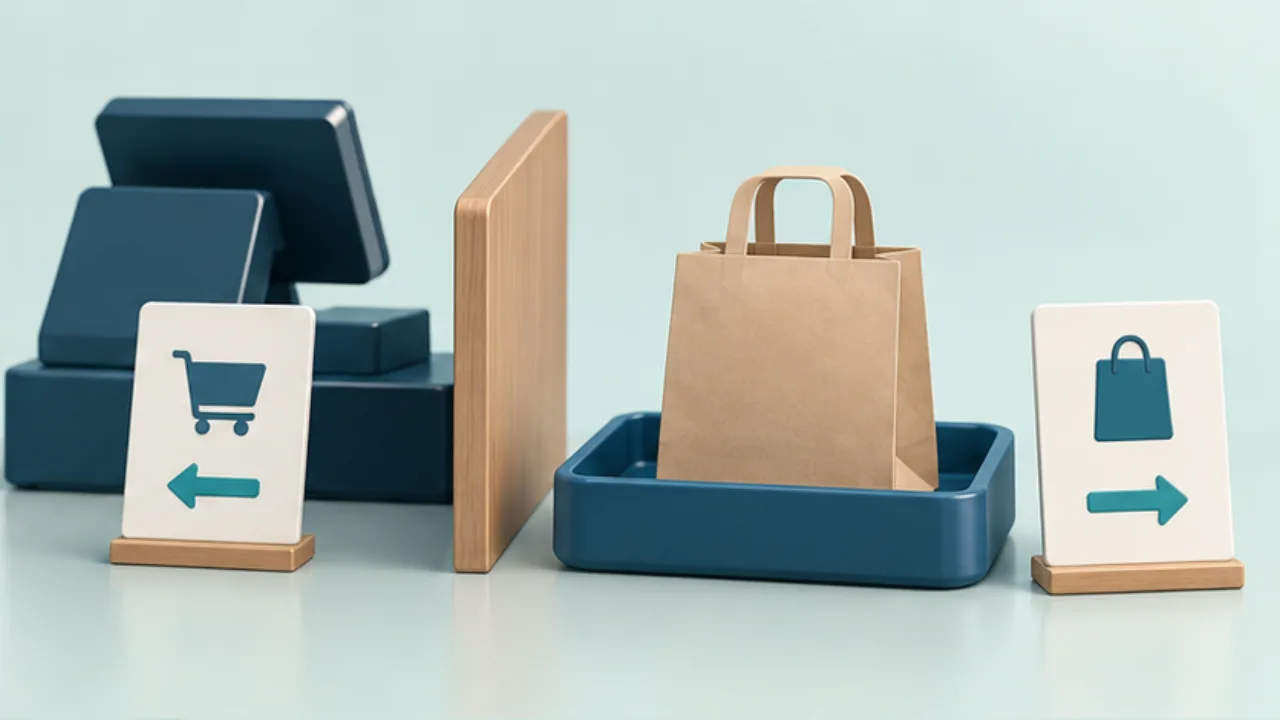
If ordering and pickup happen at different places, consistent names are the starting point. Explain what the customer should bring or show at pickup.
On this page
Use one name for each counter
Match the sign, receipt, display, and staff instructions. A customer should not need to infer that several different labels refer to the same place.
State the pickup requirement
An original number-based example is: “Order pickup — Come to this counter when your number is called. Please show your receipt.” Replace it if the shop uses a different identification process.
Check the route and waiting area
Follow the path from ordering to pickup. Pair arrows or numbers with destination names, and avoid distinguishing routes by color alone.
Address preorders where paths diverge
If preorder collection uses a different counter, explain that at the decision point. If it uses the same counter, add only the necessary distinction. After installation, collect questions staff repeatedly answer and revise the wording accordingly.
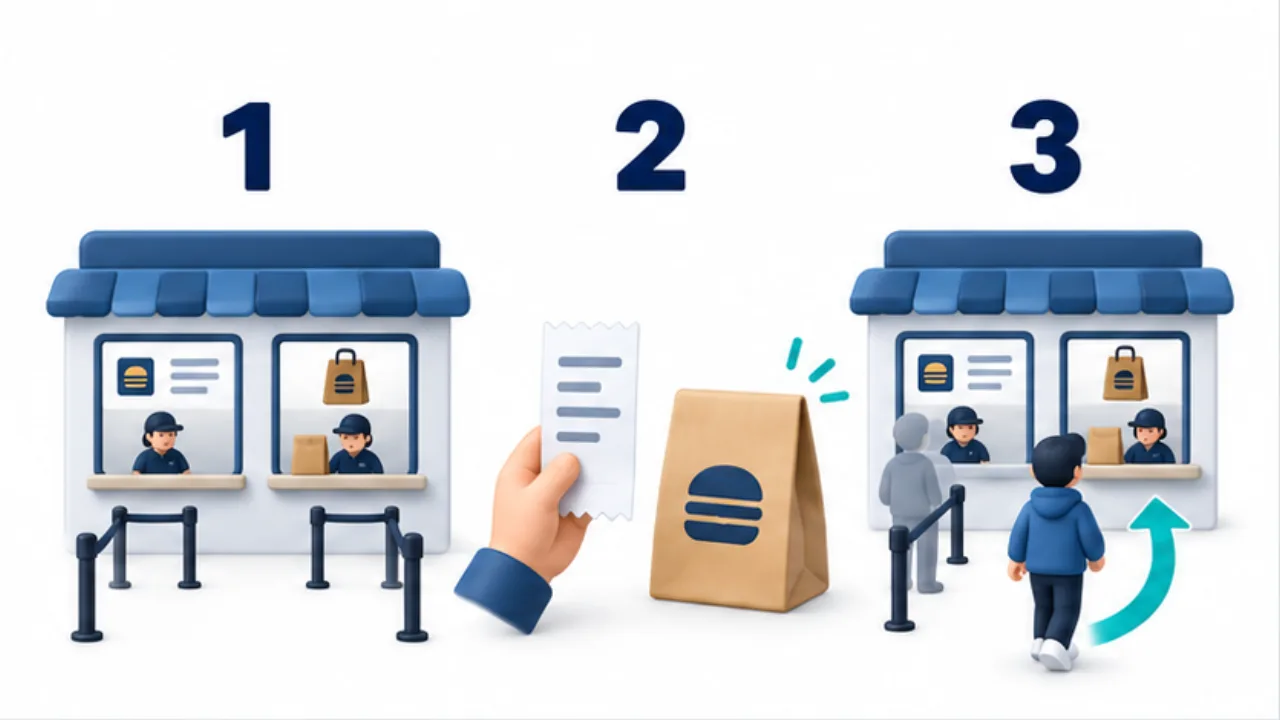
Select the image to enlarge.
- Use consistent counter names in signs and staff explanations.
- State what is needed for pickup, such as a ticket or receipt.
- Check the route from the waiting area to the pickup counter.
Focus on what an existing customer needs next
Someone reading a pickup sign may already have ordered and paid. Their questions are where to wait, when to approach, and what to show. Giving new-order instructions equal prominence on the same sign can blur the distinction between the two queues.
Use the same pickup name on the distant heading, receipt, screen, and spoken explanation. If several labels describe one location, consider one consistent term so customers do not have to connect the aliases themselves.
Example: move from ordering to an adjacent counter
Suppose pickup is beside the ordering counter. From the position where ordering finishes, check whether the pickup heading is visible. If necessary, add a direction that includes the destination name, such as “Collect your order at the pickup counter to the right.”
Verify direction from the actual viewing position before printing. If the waiting area is separate from the counter, explain that distinction. A numbered-call process should not implicitly instruct every customer to gather directly in front of the service point.
If a receipt is needed, introduce that requirement after ordering as well as at collection. Walk through the process before opening and compare the written instructions with what staff actually do.
Turn recurring questions into specific revisions
| Recurring question | Information to reconsider |
|---|---|
| Can I order here? | Order and pickup headings |
| Where should I wait? | Waiting location and calling method |
| What do I show? | Number or receipt procedure |
| Where is my preorder? | The point where preorder and ordinary routes diverge |
Do not place every answer on one crowded notice. Put each instruction where its question arises.
After a terminology change, inspect receipts and screens for old labels. When the process itself changes, update printed material and staff explanations together. A coherent route depends on those surfaces agreeing, not only on one well-written pickup sign.