Shop signs and printing
Make a sold-out notice specific to the item

A sold-out sign should identify one item without making the whole shop appear closed. Use wording that matches the actual stock situation.
On this page
Name the product
An original wording pattern is: “[Product] has sold out for today.” Place it where readers can associate it with that product rather than an adjacent item.
Publish only confirmed availability
Do not promise tomorrow's restock unless it is confirmed. A line directing customers to staff is useful only when staff have an answer or an agreed way to explain uncertainty.
Offer a relevant next step
If another product is available, identify it as an alternative after checking stock. Keep the suggestion short enough that the sold-out status remains the main message.
Define when the sign comes down
Assign removal at restocking or before the next trading day. Review any online availability notice at the same time. These wording and maintenance suggestions are editorial examples to adapt to the shop's actual operation.
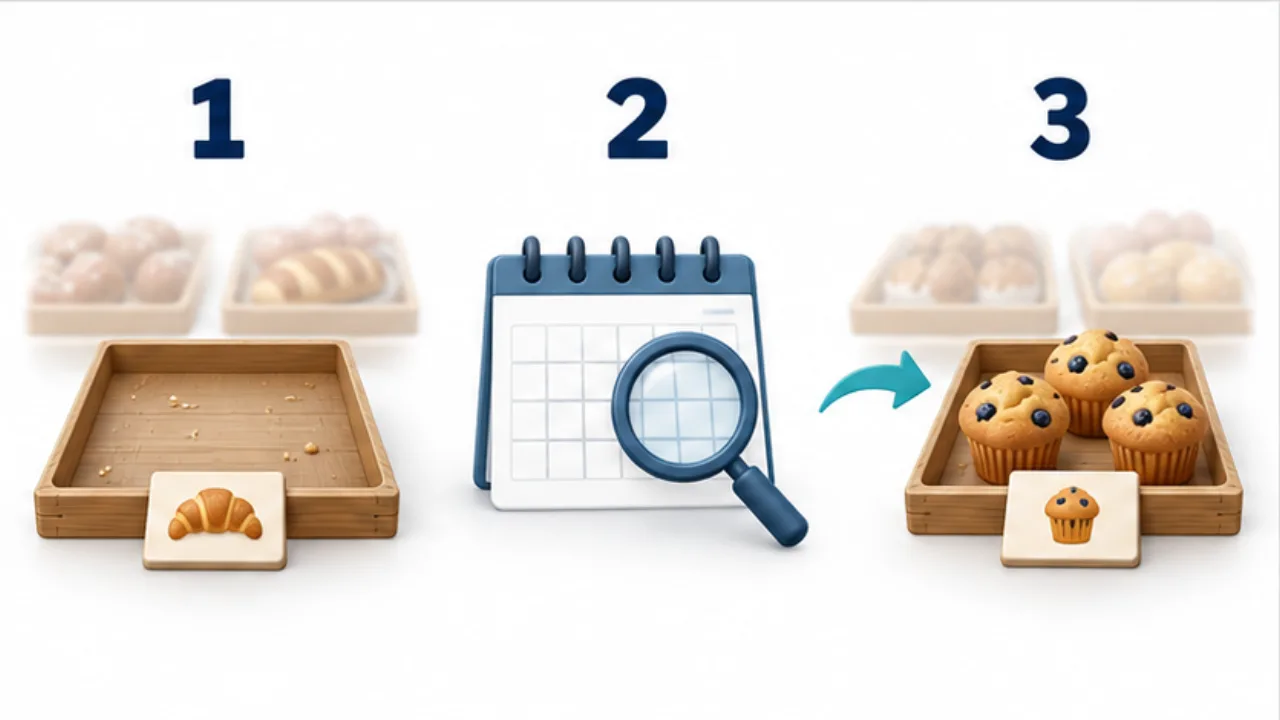
Select the image to enlarge.
- Associate the notice with the affected product.
- State future availability only to the extent confirmed.
- If suggesting an alternative, check that it is available.
Attach availability to the exact product
“Sold out” attracts attention but does not identify its scope. Even on one part of a shelf, it can appear to describe neighboring items. Name the product and clarify whether the status concerns today's batch or a particular variant.
Where sizes or flavors differ in availability, express the distinction in words. Do not depend only on color to show which remains available. Keep the wording easy to update as stock changes.
Example: one baked item sells out
Imagine a bakery where lemon cake has sold out but other products remain available. Make the main message “Lemon cake has sold out for today.” Add a brief statement about other available items only if it matches the actual situation.
If the notice is placed at the entrance, check that it does not make the entire shop appear closed. If you name a specific alternative, verify its stock and decide how to change the notice if that alternative also sells out.
Avoid adding an unconfirmed replenishment time. A customer may plan a visit around it. Keep staff explanations consistent with the information the shop can actually provide.
Review three kinds of mismatch
| Mismatch | What to inspect |
|---|---|
| Product | The name and physical placement refer to the same item |
| Availability | Alternatives and remaining variants match current stock |
| Time | An old sign is not still displayed after replenishment or the next opening |
Writing “for today” does not remove the notice automatically. Include sold-out cards in closing or opening checks and assign the responsible person.
For a reusable card, verify that its wording is appropriate before putting it out again. The useful outcome is that customers can distinguish what is currently available from what is not, without interpreting a general closure message or relying on an outdated promise.
Treat the alternative suggestion as supporting information. The main stock status should remain easy to identify, even when the design includes a helpful next choice.