Shop signs and printing
Keep Japanese and English shop signs consistent
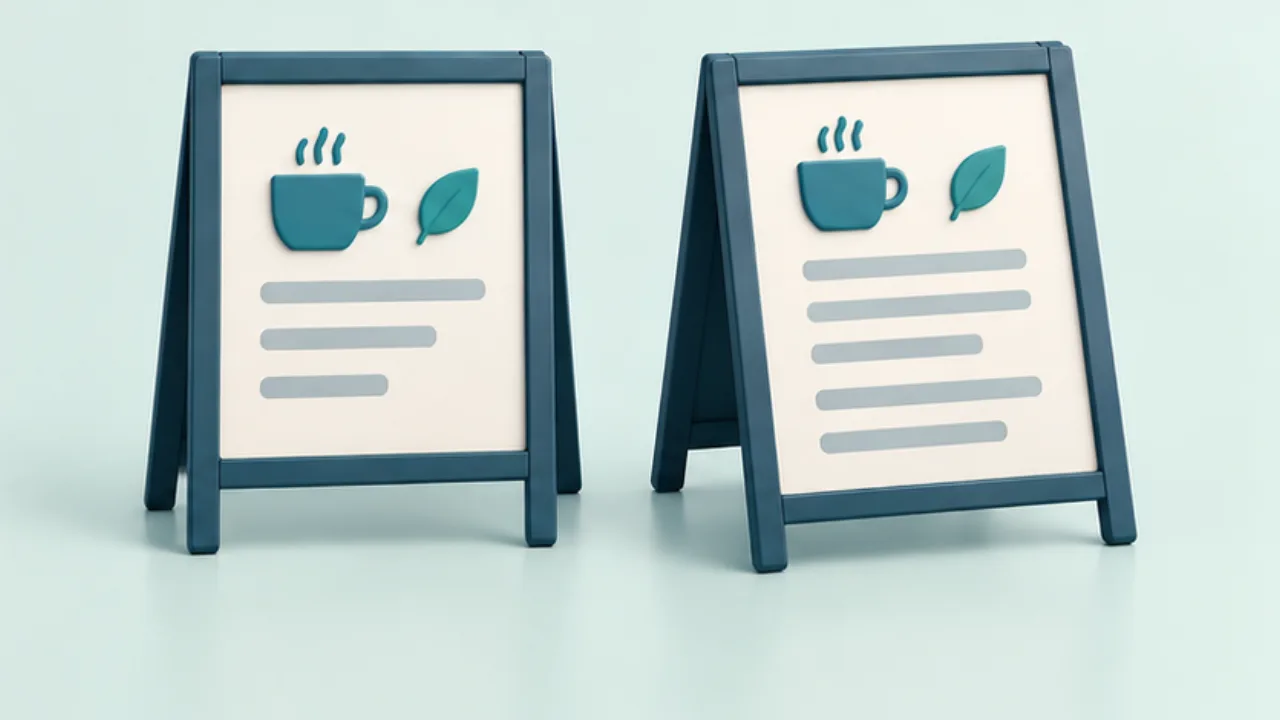
Adding English means preserving the same action and conditions, not merely shortening Japanese copy. Use concise paired instructions.
On this page
Name the action
Original examples include “Please order here,” “Order pickup,” and “Please line up here.” Choose the action that matches the actual counter or queue.
Preserve material conditions
Carry across opening hours, service cutoffs, and booking requirements. Keep a booking request distinct from confirmation. Use unambiguous date wording where numeric month and day order could be confused.
Keep corresponding text together
Place the English close to the matching Japanese line or use shared numbering. If English becomes too long, edit it for clarity instead of shrinking it excessively or dropping conditions.
Review against the operation
Verify the examples at the real location. When using machine translation, compare conditions with the source. Complex contractual terms need a separate review process; a short bilingual shop sign is not a substitute.
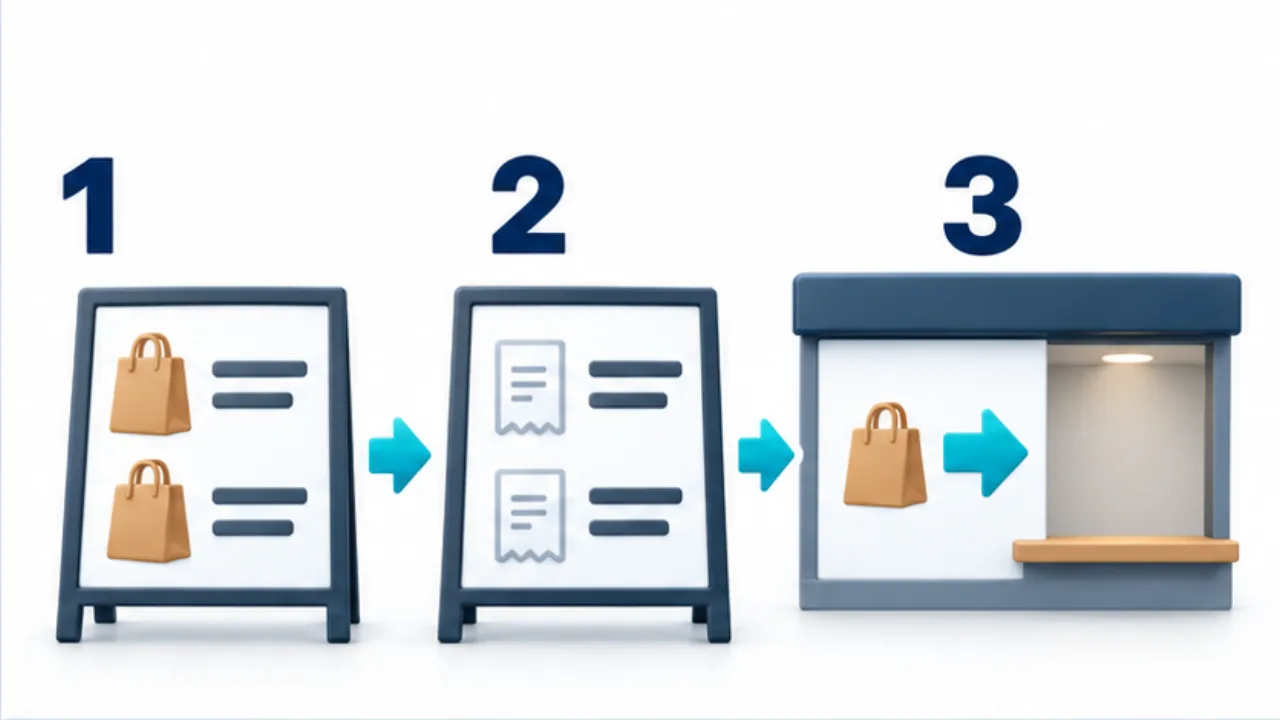
Select the image to enlarge.
- Describe the same requested action in both languages.
- Include the same requirements, such as showing a receipt.
- Check that the counter names and arrows indicate the same destination.
Matching information does not require matching length
Japanese and English can use different natural sentence structures and lengths. Preserve the action, location, timing, and conditions rather than forcing both into identical line widths.
Review the Japanese source for ambiguity too. A direction equivalent to “over there, please” leaves the action unclear. Naming what to do at which counter provides a more useful source for both languages.
Example: separate ordering from pickup
Imagine a shop with distinct order and pickup counters. Use an action-led instruction such as “Please order here” for the order point and a destination label such as “Order pickup” for collection.
Associate both language versions with the same physical destination and arrow. If a receipt is required at collection, include that condition in both. “Please show your receipt” is a short English example to use only where it matches the process.
Ask someone to follow the English side alone. They should be able to choose the same action without needing information that appears only in Japanese. Repeat the comparison for any opening hours or reservation requirements.
Compare meaning by field
| Field | Review question |
|---|---|
| Action | Are ordering, registration, and pickup distinguished? |
| Location | Do both versions identify the same counter or line? |
| Conditions | Do timing and required items agree? |
| Updates | Does either version retain an old date or name? |
After editing, review the physical layout as well. A longer English line placed too close to the next item can look as if it translates the wrong Japanese instruction.
Use spacing or shared numbering to keep corresponding content together. Each language should supply the necessary information independently. Treat dates, hours, and destination-name updates as changes to a pair, so a future revision does not leave the two audiences following different instructions.
The wording examples are small operational signs to adapt, not substitutes for a separate review of complex terms.