Shop signs and printing
Place a sign before the reader needs to decide
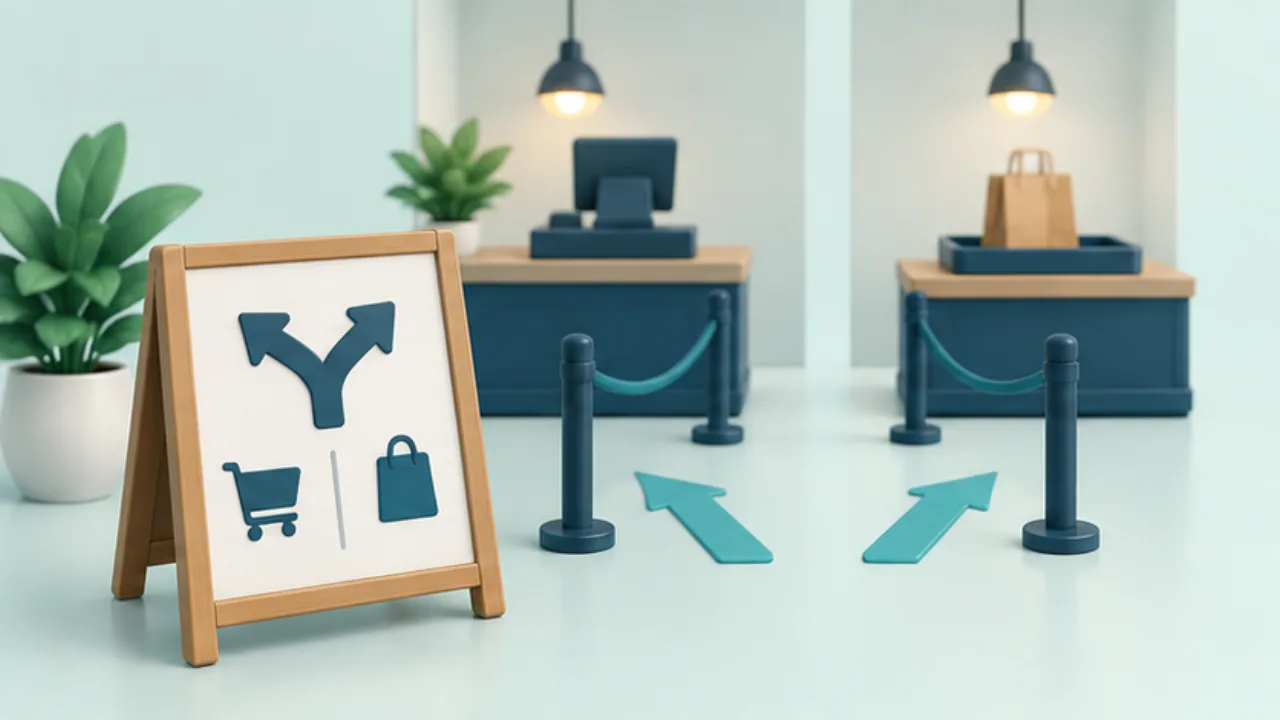
A clear sentence still fails if the reader sees it after passing the decision point. Walk the customer route before choosing a location.
On this page
Follow the unfamiliar visitor's route
Move from entrance to ordering, payment, and pickup. Note where someone must choose the next action.
Match placement to purpose
Opening hours belong before the entry decision; ordering instructions belong before joining the order queue; pickup directions belong before leaving the payment area. These are original planning examples, not fixed placement rules.
Check obstruction and glare
Inspect the sign with doors open, people waiting, and shelves stocked. Check reflections on glass. Tune text size after establishing the actual location.
Revisit after layout changes
Recheck arrows and destination names when counters move. Keep a placement photo in production notes so another staff member can reproduce the orientation. The design reference below concerns making the sign; the placement workflow is an editorial suggestion.
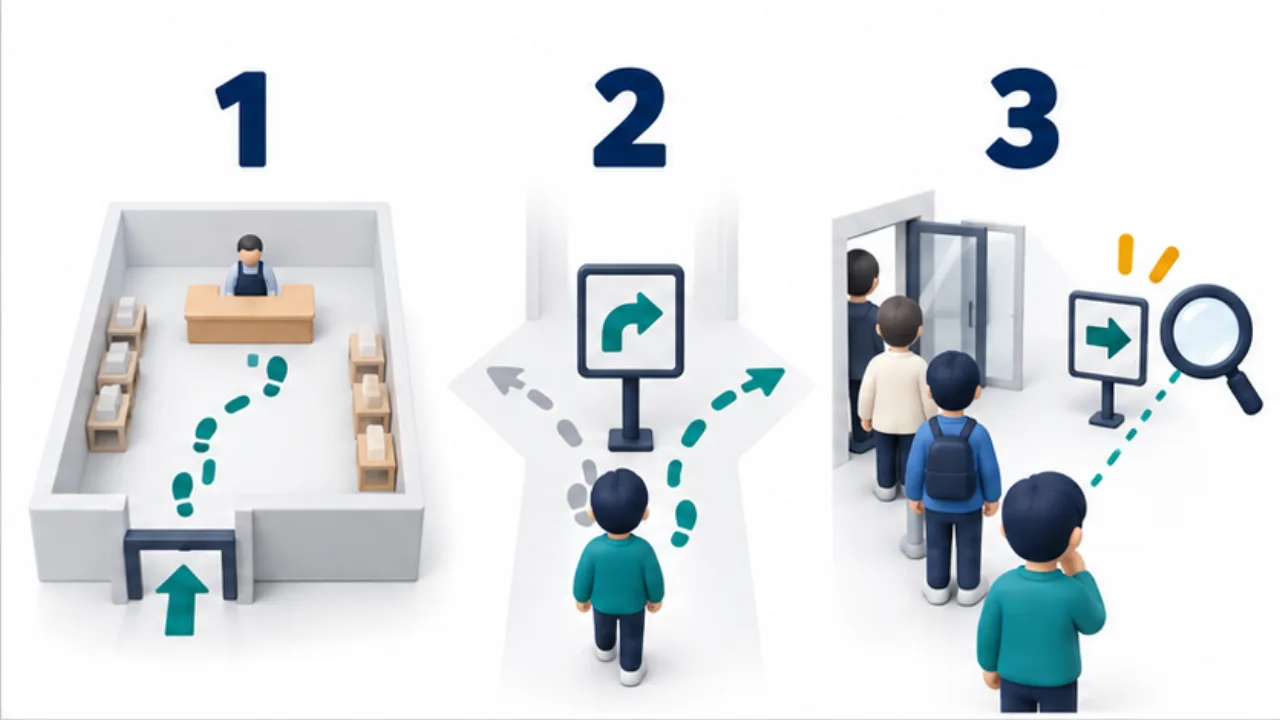
Select the image to enlarge.
- Walk from entry through ordering, payment, and pickup.
- Place each notice before the decision it supports.
- Check obstruction from doors, queues, and reflections.
A visible location is not always a useful location
An empty wall can be easy to decorate but too late in the customer's route. Ordering instructions seen only after ordering cannot support the earlier decision. Pickup instructions outside the shop may not help someone moving from the payment point.
For each message, identify when its question arises. Consider arriving visitors, customers who have just ordered, and people collecting preorders separately. If their routes diverge at one location, let them compare destinations there.
Example: the ordering counter is farther inside
Imagine pickup near the entrance and ordering farther into the shop. A new visitor may approach the first counter they see. From the entrance, identify the order counter by name and direction. Label the near counter for customers whose orders are ready for collection.
Walk the route and pause before each choice. Do not move at the pace of a staff member who already knows the destination. Check with the door open, customers waiting, and shelves stocked.
If a shelf or person blocks the notice, increasing font size may not address the obstruction. Reconsider location or height according to the actual viewing condition.
Record how the sign should be installed
| Record | What the next person can reproduce |
|---|---|
| Placement photograph | Relationship with surrounding objects |
| Intended viewing direction | Correct arrow and text orientation |
| Named destination | What changes if a counter moves |
| Conditions reviewed | Door and queue obstruction |
The record should help someone return the sign to the intended position. A movable sign stored overnight should not reappear facing a different direction without review.
After rearranging the shop, walk from the entrance again and look for arrows pointing to former destinations. Completing a print and completing an installed wayfinding instruction are different milestones. Evaluate the latter within the actual route that customers must follow.