Shop signs and printing
Choose the first message on a shop sign
A sign becomes easier to organize when you choose what the reader needs to notice first. Start with the place where it will be used.
On this page
Give the sign one job
An entrance sign may identify the shop, a shelf sign may identify a product, and a counter sign may explain the next action. Write that job in one sentence before designing.
Separate the information
For a baked-goods shelf, an original example structure is: “Today's baked goods,” followed by the product name and price, then a short packaging note. Replace every detail with the actual offering.
Establish a hierarchy
Make the main message prominent and supporting copy smaller, while keeping prices and conditions readable. Adobe's design guide discusses emphasis through text size; the sample structure here is an editorial suggestion.
Check what a new reader understands
Ask someone unfamiliar with the draft what the sign announces and what they would do next. If their reading differs from your intention, adjust the position or amount of information before adding more decoration.
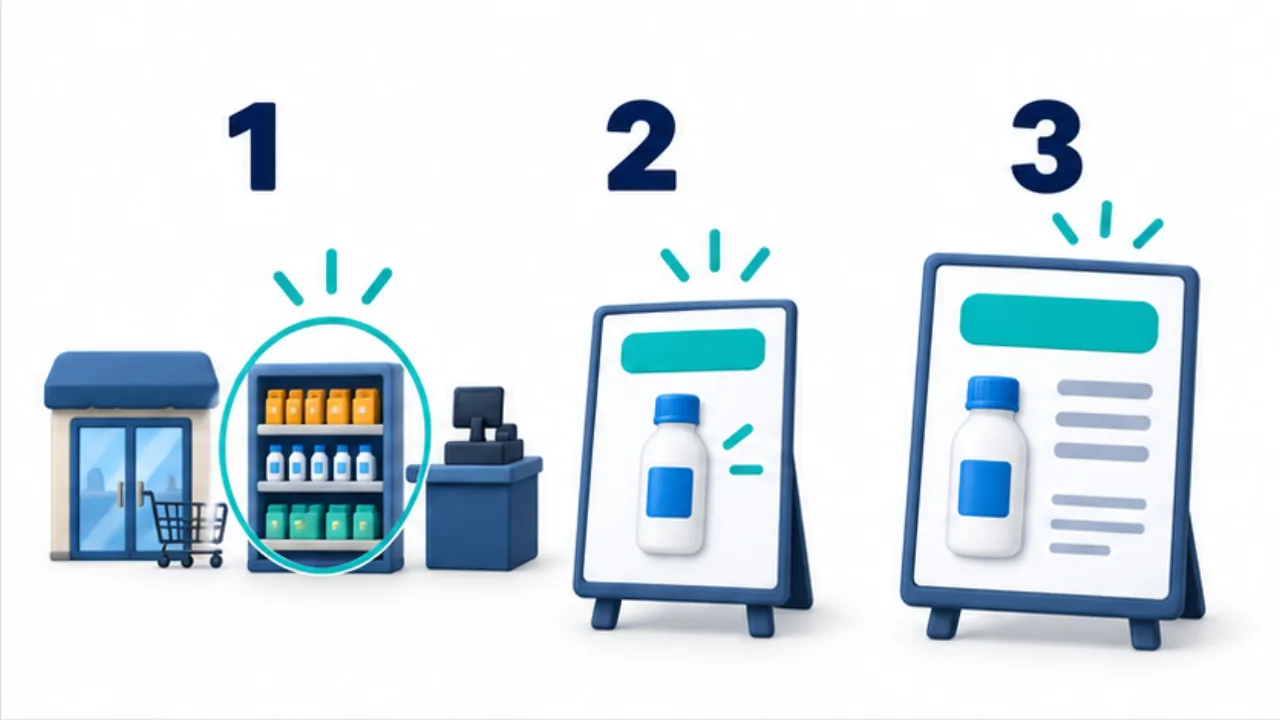
Select the image to enlarge.
- Decide the notice’s role at the entrance, shelf, or register.
- Choose the first message readers should notice.
- Separate the headline from supporting details while keeping conditions legible.
Turn the customer's question into the main message
The maker may want to explain every product feature, while a passerby first needs to know what the sign is about. Choose a concrete question: what is available, what does this item cost, or where should an order be placed?
The answer gives you a reason for the visual hierarchy. On a shelf, avoid mixing product-selection guidance with every general shop announcement. Decide whether an event notice or social-media invitation belongs at this particular decision point.
Example: reorganize a baked-goods sign
Imagine a draft that emphasizes “New,” an ingredient story, the product name, price, and takeout information equally. First identify the product clearly. Keep its verified price and selling unit together. Choose a feature that helps distinguish the item, then place packaging information where it supports the buying decision.
If “New” remains the main announcement, still make clear what is new. A large promotional word without an identifiable product leaves the reader to reconstruct the meaning.
Ask someone unfamiliar with the draft to follow it from headline to product and price. If they ask what the item is, revise the product label or placement before adding decoration.
Ask about understanding, not only prominence
| What to learn | Example question |
|---|---|
| Initial meaning | What does this sign announce? |
| Product association | Which item do you think it describes? |
| Missing decision information | What else would you need to know before choosing? |
| Next action | Where would you go or what would you do next? |
This is a review of communication, not a measurement of sales impact. Asking only whether the sign stands out does not reveal what a person understood.
Compare the answers with the sign's intended job and adjust the sequence. Finally, place the draft on the actual shelf and inspect it with the products and neighboring signs. The surrounding display is part of how the message will be interpreted.