Notes and writing
Write notes you can find again

Add names, context, and concrete nouns to your notes, then check how your app actually searches them.
On this page
A note can be easy to understand today and difficult to retrieve later. The missing piece is often a word you would actually search for. You do not need a perfect taxonomy to improve this; a short clue at capture time can help.
Replace vague references
Compare “Ask about that issue next week” with “Ask Acme about the warehouse delivery delay at the September review.” The second version includes the organization, subject, and occasion. Choose details that distinguish this note from others, rather than adding a long list of generic tags.
For a reading note, record the book or article title. For a meeting, name the project. For a technical problem, include the visible error text when it is safe to store it.
Keep useful alternative words
You may remember a nickname while the document uses a formal name. Put both in the note when that difference matters: “Project Maple / warehouse relocation.” For an abbreviation, expand it once. Do not fill every note with speculative keywords; preserve terms you already use.
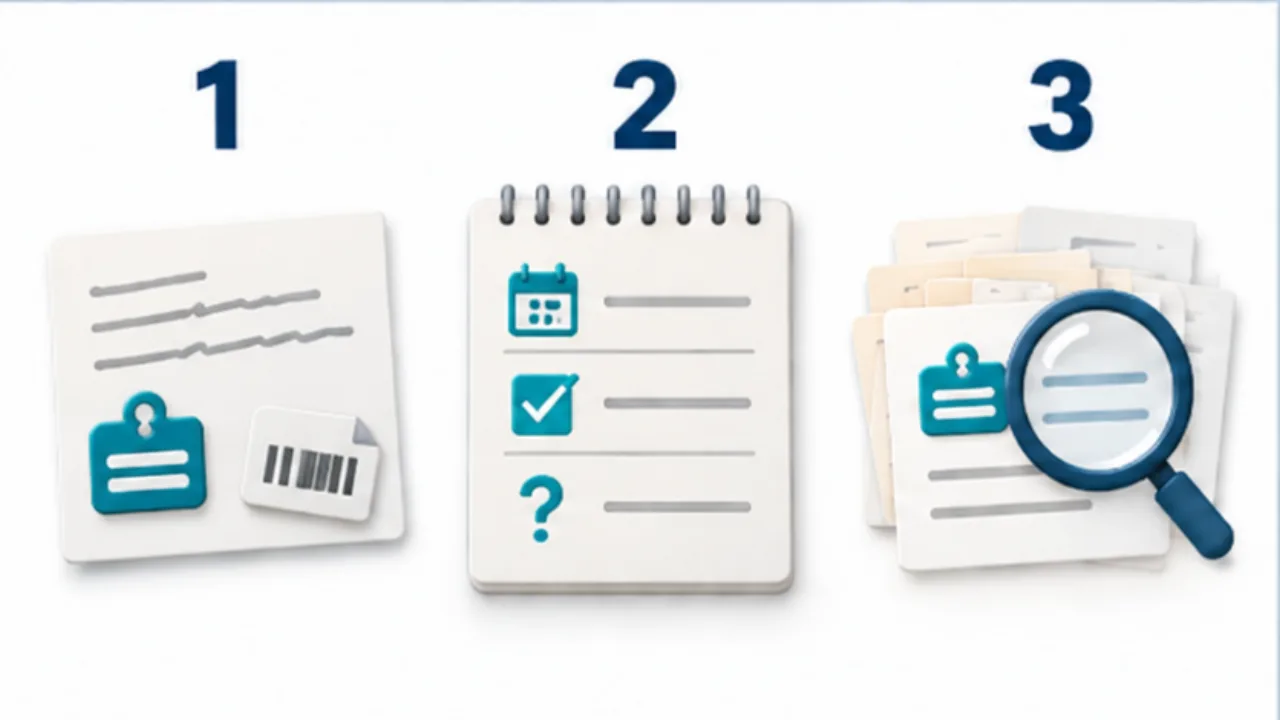
Select the image to enlarge.
- Retain names, models, or other words you would search for.
- Distinguish the record date, deadline, decisions, and open questions.
- Search using likely clues and check whether the necessary context is recoverable.
Test the search tool
Search behavior differs between apps. Check whether the search includes titles, body text, attachments, archived notes, and excluded folders. OCR or semantic search may help in some products, but should not be assumed.
Try a project name, an exact phrase, and a term from an older note. If a known note is absent, investigate the search scope before rewriting the archive.
Repair notes when you need them
When you find a note after a difficult search, add the word you initially expected it to contain. This improves the material you actually use. A daily note can remain chronological while its entries carry these retrieval clues.
Repair a note that can be found but cannot be used
Appearing in search and supplying a usable answer are separate outcomes. A note about a sign proposal may be retrievable by project name while leaving it unclear whether option B was approved or merely discussed.
Add the decision state as well as search terms. When later information arrives, label it as a follow-up rather than silently rewriting an earlier uncertainty into a settled fact.
For a fictional example: “Follow-up: request a quotation for option B; installation date remains undecided.” Include the confirming source or participant when needed.
Classify the retrieval failure
| What happened | Candidate correction |
|---|---|
| The expected word was absent | Add the alternate name actually used in the search |
| The word exists but no result appeared | Inspect search scope, exclusions, or attachment handling |
| Too many results appeared | Combine concrete project and subject terms |
| The note appeared but its conclusion was unclear | Distinguish approved, proposed, and unresolved items |
One failed search does not justify tagging the entire archive. Repair the note involved and record what was missing. If the same issue recurs, turn that specific pattern into a small writing convention.
For shared notes, consider whether another reader knows your private abbreviation. Expanding a name once or using consistent project terminology may provide a more useful clue than generic labels.
Finally, test the complete retrieval task: find the note, identify the relevant conclusion, and return to its source if necessary. A sophisticated search function cannot by itself supply a decision that the note never recorded.
Use actual retrieval problems to guide edits. That keeps the maintenance connected to information people need, rather than creating a taxonomy whose cost grows faster than its usefulness.